
Jan 6, 2024 | Exchange-Traded Funds, Fundamental Analysis, Investment Basics, Option Trading Basics, Options Calculations, Options Trade Execution, Stock Investing, Stock Option Strategies
click ↑ 4 Featured In 2023, BCI introduced the CEO Strategy, a streamlined approach to covered call writing using the Select Sector SPDRs. This article will explain why sector rotation in our business cycle will create opportunities...

Nov 11, 2023 | Exchange-Traded Funds, Exit Strategies, Option Trading Basics, Options Calculations, Options Trade Execution, Put-selling, Stock Option Strategies
click ↑ 4 Featured Many option traders who sell cash-secured puts prefer not to take possession of the underlying shares. Typically, when a trade is structured, the strike is out-of-the-money (OTM- lower than current market value). Exercise will occur when the share...
Sep 9, 2023 | Covered Call Exit Strategies, Exchange-Traded Funds, Exit Strategies, Investment Basics, Option Trading Basics, Options Calculations, Options Trade Execution, Stock Option Strategies
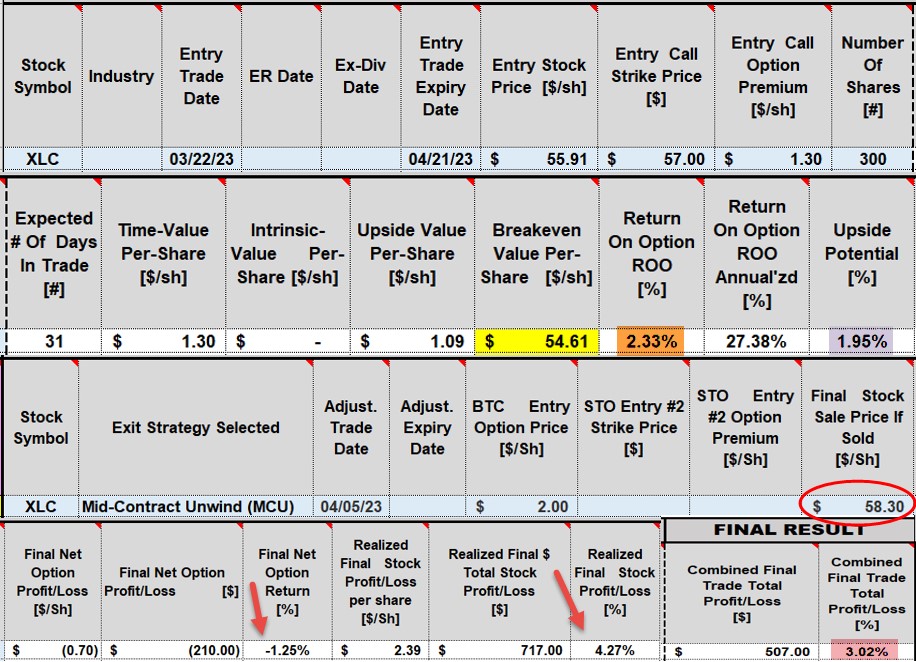
Which %, if any, of our original covered call writing initial time-value return, should we use to close both legs of the trade, and guarantee a realized return? 60%? 75%? Higher? Lower? Closing both legs of a covered call writing trade mid-contract is known as the...

May 5, 2023 | Covered Call Exit Strategies, Exchange-Traded Funds, Exit Strategies, Investment Basics, Option Trading Basics, Options Calculations, Options Trade Execution, Stock Option Strategies
One of the key methods to partially automate our covered call writing exit strategy arsenal is to place buy-to-close (BTC), good until cancelled (GTC) limit orders to close our short calls based on our BCI 20%/10% guidelines. We instruct our broker to buy back the...
Apr 15, 2023 | Covered Call Exit Strategies, Exchange-Traded Funds, Exit Strategies, Investment Basics, Option Trading Basics, Options Calculations, Options Trade Execution
All strategies, including covered call writing and selling cash-secured puts, have their pros and cons. The same holds true for the exit strategies associated with them. Several of our members have written to me over the years regarding a “can’t...

Dec 3, 2022 | Exchange-Traded Funds, Investment Basics, Option Trading Basics, Options Calculations, Stock Option Strategies
Covered call writing is defined as first purchasing or already owning the underlying security and then selling the corresponding call option. By doing so, we are protected; we know our cost-basis. A BCI member proposed to me an extreme bear market strategy where a...

 Podcast