
Latest Insights in Stock Market Investing

BCI PODCAST 77: Buyers Have Rights and Sellers Have Obligations- Covered Call Writing Explained
Watch Video: Listen To Audio Version: This podcast analyzes covered call writing from the perspectives of both buyers and sellers. The personal risk-tolerance of the investor will play a major role in determining how our option trades are structured. A real-life...

Collar Trades: The Rationale for Maximum Gains and Losses
Covered call writing trades have 2 legs: the long stock position and the short call. The collar trade adds a third leg, the long protective put. The calculations for potential trade maximum gain or loss can be confusing. This article will break down the mathematics...
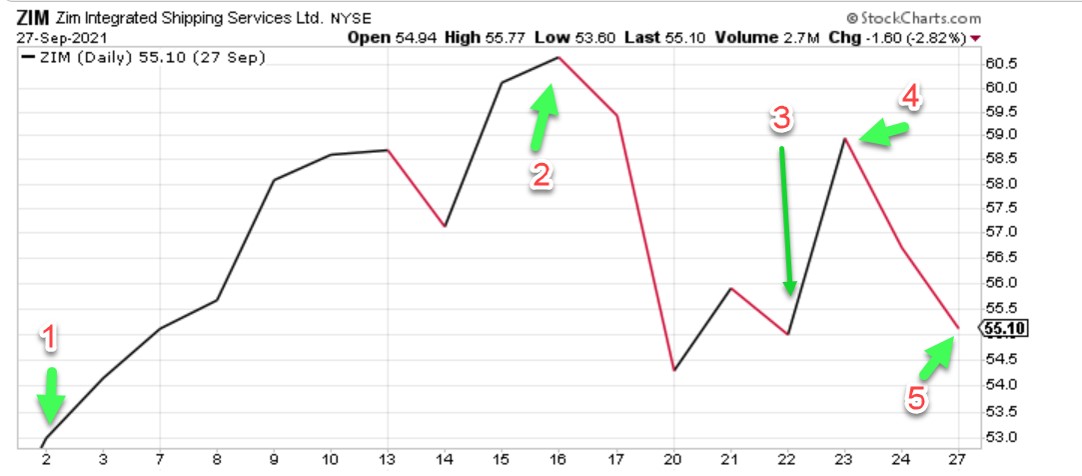
Generating a 3-Income Stream Put Trade: A Real-Life Example with ZIM Integrated Shipping Services Ltd. (NYSE: ZIM)
We have all read that when we sell a cash-secured put, the maximum return is the put premium. Is that true 100% of the time? Enter our exit strategy arsenal. On 9/27/2021, Richard shared with me a series of put trades he executed with ZIM. It involved an initial put...
BCI PODCAST 76: 5 Top Myths and Misunderstandings about Covered Call Writing
Watch Video: Listen To Audio Version: This podcast will debunk 5 of the most common myths associated with covered call writing. Option exercise, stock selection and earnings reports will be part of the presentation. BECOME A BCI MEMBER TODAY: PREMIUM MEMBERSHIP SEE...

Making a Great Covered Call Trade Even Better: A Real-Life Example with Revolve Group, Inc. (NYSE: RVLV)
Covered call writing trades, when structured and managed properly, can result in impressive short-term and annualized returns. Such was the case with Art who shared with me a series of trades he executed with RVLV in August - September 2021. The returns were...
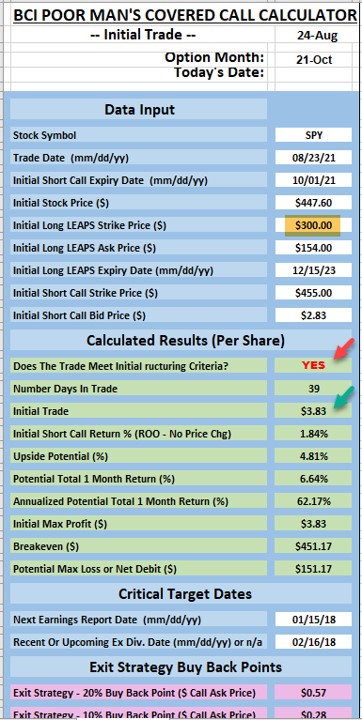
The Poor Man’s Covered Call LEAPS Selection: A Real-Life Example with SPDR S&P 500 ETF Trust (NYSE: SPY)
Before initiating a poor man's covered call trade (PMCC), we must first master all aspects of the strategy including understanding the pros and cons inherent in this system. Once we have made a decision that this strategy is appropriate for our portfolios, the next...
BCI PODCAST 75: Reverse Stock Splits Understanding Contract Adjustments
Watch Video: Listen To Audio Version: Certain corporate events will result in the Options Clearing Corporations to adjust our option contract components. These include stock splits, mergers and acquisitions, 1-time cash dividends and reverse stock splits. BECOME A BCI...

Using Implied Volatility to Establish Reliable Trading Ranges for Our Option Contracts
PLEASE SEE A REVISION TO THIS ARTICLE AT THE END OF THE POST. I MADE AN ERROR AND REVERSED THE NUMERATOR AND DENOMINATOR IN ONE OF MY CALCULATIONS. THE CONCEPTS ARE ACCURATE BUT THE MATH NEEDED TO BE TWEAKED. I have written several articles on the use of VOLQ...

When to Roll Options on Successful Trades: A Real-Life Example with iShares MSCI India ETF (BATS: INDA)
Exit strategies for covered call writing are an inherent part of our BCI methodology. They allow us to mitigate losses, enhance gains and even turn losses into gains. There will be times when find ourselves in situations where it not 100% clear whether we should pull...
 Podcast
- 126. Analyzing the Status of a Rolling-Down Trade
- 124. Dividends and After-Hours News Causing Exercise of OTM Call Strikes
- 123. Implied Volatility, IV Rank and IV Percentile Defined and Practical Applications
- BCI PODCAST 122: Should I Roll-Out My Deep In-The-Money Call Option Mid-Contract?
- BCI PODCAST 121: What is a SPAC (Special Purpose Acquisition Company)?
- 120. Using the Nasdaq-100 Volatility Index (VOLQ) in Covered Call Writing Decisions
- 119. Establishing Our Cost-Basis for Long-Term Holdings
- 118. Adjusting Our Portfolio Mix to Achieve Diversification and Cash Allocation
- 117. When a Covered Call Strike Moves $1000.00 In-The-Money
- 116. How to Execute a Covered Call Trade with a Buy/Write Combination Form
Explore Investment Topics
Covered Call Exit Strategies
Exit Strategies
Our Journey and Mission
The Blue Collar Investor was founded with a simple mission: to empower everyday individuals with the knowledge to invest wisely in the stock market. Our blog focuses on demystifying stock options, providing readers with the tools they need to succeed. We believe that anyone can learn to invest effectively, regardless of their background or experience.
Our story began when our founder Dr. Alan Ellman, realized the lack of accessible resources for average investors. Determined to bridge this gap, we created a platform that offers comprehensive guides, expert tips, and real-world strategies. Today, The Blue Collar Investor is a trusted resource for thousands of readers seeking to enhance their financial literacy and achieve their investment goals.