Jun 6, 2015 | Investment Basics, Option Trading Basics, Options Calculations, Put-selling, Stock Option Strategies
When studying covered call and put-selling option prices we learn that the market will correct any potential arbitrage opportunities. Arbitrage is the simultaneous purchase and sale of an option in order to profit from a difference in the price. It exploits price...
May 30, 2015 | Investment Basics, Option Trading Basics, Options Calculations, Stock Investing, Stock Option Strategies
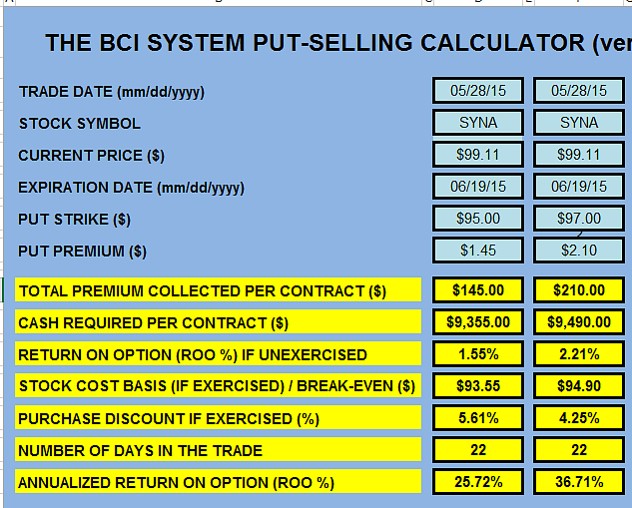
Mastering both conservative option selling strategies, covered call writing and put-selling will allow us to maneuver our way through most market situations. This past Wednesday, May 27, 2015 several of the stocks on our BCI Premium Watch List gapped up. On last...

May 23, 2015 | Investment Basics, Option Trading Basics, Stock Option Strategies
Check the options chain before selling a covered call or cash-secured put. In addition to determining the premiums and returns we will generate we also need to make sure the interest or liquidity in these options will be adequate enough for favorable trade executions....

May 16, 2015 | Covered Call Exit Strategies, Exit Strategies, Investment Basics, Option Trading Basics, Options Calculations, Stock Option Strategies
Covered call writers know that early exercise is extremely rare. Call buyers are generally better off selling the option rather than exercising early. In this article we will evaluate why a call buyer may choose to exercise an in-the-money call option prior to...

May 9, 2015 | Covered Call Exit Strategies, Exit Strategies, Investment Basics, Option Trading Basics, Stock Option Strategies
Capturing dividends using covered call writing has been a topic on great interest lately. I recently wrote an extensive white paper on this topic located in the “resources/downloads” section of your premium site. In this article I will evaluate an...

May 2, 2015 | Exit Strategies, Investment Basics, Option Trading Basics, Stock Option Strategies
Understanding and mastering the Greeks are key factors in becoming an elite covered call writer and put-seller. In this article, I will focus on delta, one of the important Greeks, as it relates to the moneyness of options (in-the-money, at-the-money or...

 Podcast